
Pick Me Up 3D: Taxi Game
Azur Interactive Games LimitedCasual
4.33.09K Reviews
- Version
- 2.10.1
- Installs
- 100.00M
- Age Rating
- Everyone
Screenshots
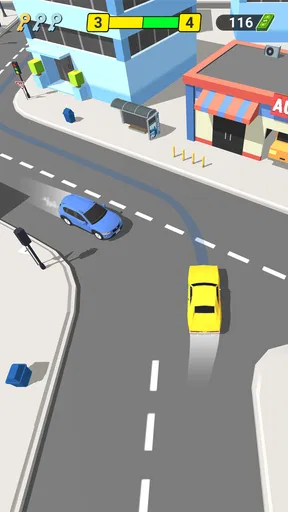
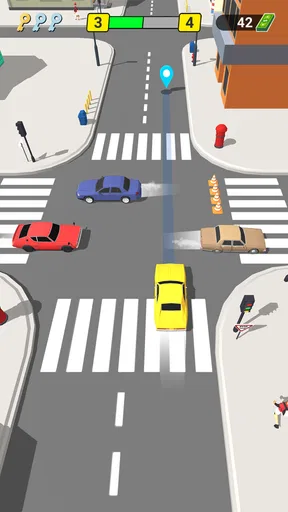
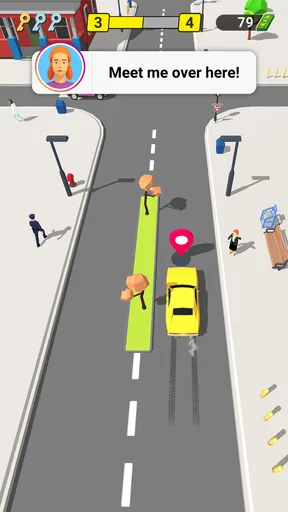
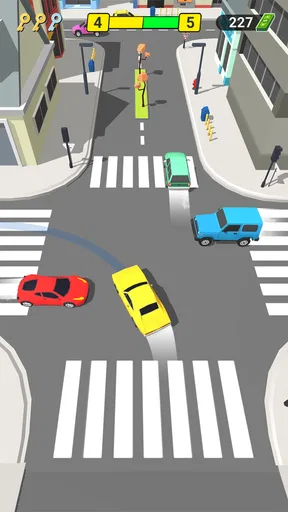
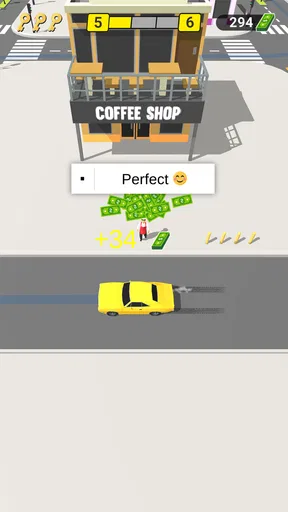
Our Review of Pick Me Up 3D: Taxi Game
 Analysis by Appyee
Driving a taxi sounds straightforward: collect a passenger, avoid trouble, and reach the destination. Pick Me Up 3D: Taxi Game turns that simple idea into a quick casual game built around short decisions and immediate movement. I found it easy to understand within a few minutes, but the best results came from treating each ride as a small planning exercise rather than simply tapping as fast as possible.
That distinction matters. This is not a full driving simulator with a large map, realistic traffic rules, or a detailed career system. It is a compact arcade-style experience from Azur Interactive Games Limited, aimed at players who want something they can open, play briefly, and put down without a long tutorial or complicated controls. The free entry point makes it approachable, while optional purchases priced from $2.99 to $5.99 per item may appeal to players who want to spend within the game.
After spending time with it, I see the game as a good fit for short breaks, especially when I want a low-pressure challenge that still rewards attention. It is less suitable if I am looking for deep vehicle customization, realistic navigation, or a long-form driving adventure. The appeal is in repeating a clear routine and gradually becoming more consistent at it.
How the basic taxi routine feels in practice
The central loop is deliberately uncomplicated. I pick up passengers, guide the vehicle toward their destinations, and try to finish each trip without turning a manageable route into a costly mistake. The game communicates its purpose quickly, which is one reason it works well for casual players and younger users. Its Everyone content rating also reflects that accessible presentation.
My first useful habit was to stop thinking of each passenger as an isolated tap. Before moving, I look at the immediate route and identify the safest direction rather than committing to the first movement that seems available. That small pause helps because the game becomes less about raw speed and more about choosing when to move, when to wait, and when a shortcut is actually worth the risk.
A realistic everyday use case is a five-minute wait for a bus, a short break between tasks, or a moment when I want interaction without having to remember a complicated storyline. I can complete a few rides, notice where I made careless decisions, and close the game. It does not demand the kind of uninterrupted attention expected by a long racing session.
The controls are approachable, but that does not mean every ride feels effortless. The challenge comes from timing and route awareness. A player who rushes every action may progress, yet repeated impatience can make the experience feel more frustrating than it needs to be. I got better results by using a steady rhythm: scan, move, reassess, then commit again.
That rhythm is also why the game feels different from a typical endless runner. An endless runner usually trains me to react continuously to a stream of obstacles. Here, the passenger objective gives each attempt a clearer purpose. Compared with a conventional racing game, though, the taxi focus is much lighter; there is no need to learn a full track, tune a vehicle, or compete through a detailed championship structure.
What I check before making a move
I found that the most useful information is usually visible in the immediate play area. Rather than staring only at the passenger or destination, I watch the space directly ahead and consider how the next movement affects the one after it. This prevents a common mistake: reaching a promising position but leaving myself with no comfortable way to continue.
Another practical tip is to avoid treating every possible opening as a shortcut. A shorter path can be worse if it forces rushed steering or leaves little room to recover. When I am playing casually, the safest repeatable route usually beats an ambitious route that works only when every input is perfect. That trade-off becomes especially important when I am trying to maintain a reliable run rather than chase a single spectacular result.
The passenger objective also gives me a natural stopping point. If I am distracted, tired, or playing while waiting for something, I can finish the current ride and pause instead of starting a long commitment. That makes the structure more convenient than many larger driving games, which often expect me to complete extended events before I can comfortably leave.
Settings and small decisions worth checking
Before settling into regular play, I recommend checking the available in-game settings and the device’s sound controls. I do not treat settings as a way to unlock a secret advantage; their value is practical. I want the game to be comfortable to read and hear, particularly when playing in a noisy place or when I need to keep the session quiet.
Sound is worth considering because short arcade games can become tiring when effects are too prominent during repeated attempts. I often lower or mute audio when playing in public, then restore it when I want clearer feedback. The decision is personal, but making it early keeps the game from becoming annoying during a longer sequence of rides.
I also check whether the display feels comfortable in the way I hold the phone. Because the action depends on quick visual decisions, glare, cramped grip, or accidental touches can matter more than they would in a turn-based puzzle. A stable grip and a clear view are simple improvements, but they make the controls feel more dependable.
Players should also remember that this is a free game with in-app purchases. I prefer to decide in advance whether I am playing entirely without spending or whether optional items fit my budget. That boundary helps keep the focus on improving my route choices rather than feeling pressured to buy something after a failed attempt. For a child’s device, the Everyone rating makes the content broadly accessible, but purchase controls are still worth handling responsibly at the device level.
The current version is 2.10.1 and runs on Android 7.0 or later. That makes it available to many older Android devices, although actual comfort can still vary with screen size, responsiveness, and general device condition. I would not judge the game only by whether it launches; quick controls feel much better on a phone that responds consistently.
Repeatable habits that make rides smoother
My most effective improvement was to separate observation from movement. I look at the next safe opportunity, make one deliberate input, and then check the new position instead of stacking several rushed actions. This sounds basic, but it reduces the number of mistakes caused by assuming the vehicle will end up exactly where I imagined.
I also use a “safe first, fast second” approach. Early in a session, I favor routes that are easy to repeat. Once I understand the pattern, I test a quicker option and compare the result. This turns experimentation into something useful rather than random. If the faster line requires perfect timing every time, I return to the safer one.
Another habit is to learn from the reason for a failed ride. If I moved too soon, I wait longer next time. If I chose an awkward angle, I approach the same area with more space. If I simply lost concentration, I stop forcing another attempt. The game is casual, but this kind of diagnosis gives it more depth than the store summary suggests.
I found it helpful to keep my thumb movement economical. Large, hurried gestures make it harder to correct position, while smaller inputs encourage control. This is not a hidden feature or a special technique; it is just a better way to interact with a game built around immediate reactions. Players who already enjoy precision-based casual games will probably recognize the benefit quickly.
For short sessions, I divide play into two moods. In the first, I focus on completing rides reliably and learning the flow. In the second, I deliberately take a few calculated risks to see whether a faster pattern is practical. Mixing those goals on every attempt can make progress feel inconsistent, so separating them gives each session a clearer purpose.
That approach also answers an important question for new players: do I need to be naturally good at driving games? Not really. The game is easy to start, and improvement comes more from patience than from advanced gaming experience. However, players who dislike repeating similar tasks may find the loop too narrow once the initial novelty fades.
Where the arcade design reaches its limits
The same simplicity that makes the game convenient also limits its long-term variety. I would not choose it over a dedicated driving simulator if I wanted realistic handling, detailed traffic behavior, vehicle tuning, or a broad open-world map. Those games offer more systems to study and more reasons to return, while this one concentrates on short taxi-focused challenges.
It can also feel repetitive for players who need constant changes in objectives. The passenger routine is the attraction, but it is also the boundary. I enjoyed polishing my timing and route choices, yet I could understand someone wanting more narrative, deeper progression, or a stronger sense of place after several sessions.
Another limitation is that quick-play design can encourage impulsive retries. When an attempt ends badly, starting again immediately is tempting, but that does not always teach me anything. A short pause to identify the exact mistake is more valuable than repeating the same rushed movement. The game rewards that self-control even though it never announces it as a formal system.
Players comparing it with other casual games should think about the kind of satisfaction they want. A match-three game may offer more deliberate planning and a clearer puzzle structure. An endless runner may provide a more continuous reflex test. A full racing title may deliver stronger competition and customization. This taxi game sits between those options: more purposeful than a purely reflex-based diversion, but much lighter than a simulation or racing career.
The purchase model is another consideration. The game is free to start, which lowers the barrier to trying it, and optional items range from $2.99 to $5.99 each. I would approach those purchases as convenience choices rather than a reason to install the game. If I want a completely distraction-free experience with no interest in optional spending, I should decide that before playing and use the available device safeguards where appropriate.
Its broad reach is easy to understand: the game has passed 100 million installs, with an average rating of 4.3 from roughly 106 thousand ratings and about 3.1 thousand written reviews. Those figures suggest that many players appreciate the accessible loop, but they do not change the central trade-off. Popularity cannot turn a compact casual game into a deep driving simulator, and it should not be judged as one.
Who should install it, and who should skip it
I would recommend it to someone who wants a free, easy-to-learn taxi game for short sessions and enjoys improving through repetition. It is especially suitable for players who like clear objectives, quick feedback, and controls that can be understood without studying a manual. A casual player can enjoy the basic loop immediately, while a more experienced player can focus on cleaner routes and better timing.
I would be more cautious about recommending it to someone seeking a realistic vehicle experience. If engine behavior, detailed maps, licensed cars, long races, or deep customization are the main attraction, a dedicated driving or racing game will be a better choice. The same applies to players who need a strong story or a large collection of distinct activities.
It is also not my first choice when I want a completely passive game. Although the rules are simple, the best results still require visual attention and timely movement. I can play it casually, but I cannot enjoy it fully while ignoring the screen or constantly switching between tasks.
For families, the Everyone rating makes the theme approachable, and the taxi premise is easy to explain. I would still supervise purchases on shared devices and make sure the player understands that free installation does not necessarily mean every optional item is free. That is a general practical step, but it matters here because the game is designed to be easy to enter and easy to replay.
My final view after settling into the routine
After learning its rhythm, I came away with a favorable but measured opinion. Pick Me Up 3D: Taxi Game succeeds because it does not overcomplicate the taxi idea. Pick up a passenger, choose your movement carefully, and reach the destination. The experience is friendly, quick to understand, and convenient when I want a few minutes of play rather than a major gaming session.
Its strongest quality is the way small habits improve the experience. Checking the route before moving, choosing reliable patterns, keeping inputs controlled, and reviewing mistakes all make the game feel more satisfying. Those habits are not elaborate hidden mechanics, but they give the simple loop enough texture to reward attention.
Its main weakness is equally clear: the structure may not provide enough variety for players who want a long-term driving hobby. I would install it for casual taxi challenges, not as a replacement for a simulator, an open-world driving game, or a competitive racer. That honest distinction is important because the game is at its best when I accept its compact arcade identity.
Overall, I think it is worth trying if I want a free casual game with a clear goal and short repeatable sessions. I would begin without spending, check the comfort of the controls and sound, then build a steady route-first habit before attempting faster patterns. If that cycle feels enjoyable, the game can remain a pleasant little time filler; if repetition quickly becomes dull, a deeper alternative will suit me better.
Verdict
Strengths of Pick Me Up 3D: Taxi Game
- Simple controls make it easy to start playing immediately.
- Short levels are ideal for quick gaming sessions.
- Bright 3D visuals give the game a cheerful appearance.
- Picking up multiple passengers adds a basic strategic element.
- The game works well for casual players of different ages.
Limitations of Pick Me Up 3D: Taxi Game
- Gameplay can become repetitive after several levels.
- Some advertisements may interrupt the experience frequently.
- Later challenges may feel more frustrating than rewarding.
- The driving physics are fairly basic and lack realism.
- Progression may feel limited for players seeking deeper gameplay.
Other Releases by Azur Interactive Games Limited
View All
Bottle Flip 3D — Tap & Jump!
Casual4.2

World War Heroes — WW2 PvP FPS
Action4.5

Off Road 4x4 Driving Simulator
Racing4.3

Railroad Empire: Train Game
Simulation4.3
Similar Picks in This Category
View All
My Talking Angela
Outfit7 Limited4.2

My Talking Tom
Outfit7 Limited4.3

Pou
Zakeh4.2

My Talking Tom 2: Pet Game
Outfit7 Limited4.3

Candy Crush Saga
King4.6

Bridge Race
Supersonic Studios LTD4.1
Frequently Asked Questions
What is Pick Me Up 3D: Taxi Game?
Pick Me Up 3D: Taxi Game is a casual driving game focused on picking up passengers and delivering them to their destinations. Instead of offering a realistic taxi simulator, it uses simple tap-based controls, colorful 3D graphics, and short levels. Players must time their movements carefully, avoid traffic and obstacles, and collect fares while trying to complete each ride safely.
How do you play Pick Me Up 3D: Taxi Game?
The gameplay is designed to be easy to understand, even for players who do not usually play driving games. You generally tap or hold the screen to make the taxi move, then release at the right moment to stop or avoid danger. Each level requires you to pick up waiting passengers, navigate roads, and reach the destination without causing a crash.
Is Pick Me Up 3D: Taxi Game free to download and play?
Pick Me Up 3D: Taxi Game is typically available as a free download on mobile devices, allowing you to start playing without an upfront purchase. However, free gameplay may include advertisements and optional in-app purchases. Ads can appear between levels or during progression, while purchases may provide bonuses or other conveniences, depending on the current version of the app.
Does Pick Me Up 3D: Taxi Game require an internet connection?
The basic driving levels may work without a constant internet connection, which makes the game suitable for short sessions while traveling or when mobile data is unavailable. Nevertheless, an internet connection can be required for advertisements, in-app purchases, updates, cloud-related features, or promotional content. Availability of offline play may also vary after updates and between devices.
Is Pick Me Up 3D: Taxi Game suitable for children?
The game has simple controls, bright visuals, and straightforward objectives, so it can be accessible to children and casual players. However, parents should check the store rating, advertising content, and in-app purchase settings before allowing unsupervised play. Because the game may display third-party advertisements, its suitability can depend on the child’s age and the device’s parental controls.
Play our best games!


